
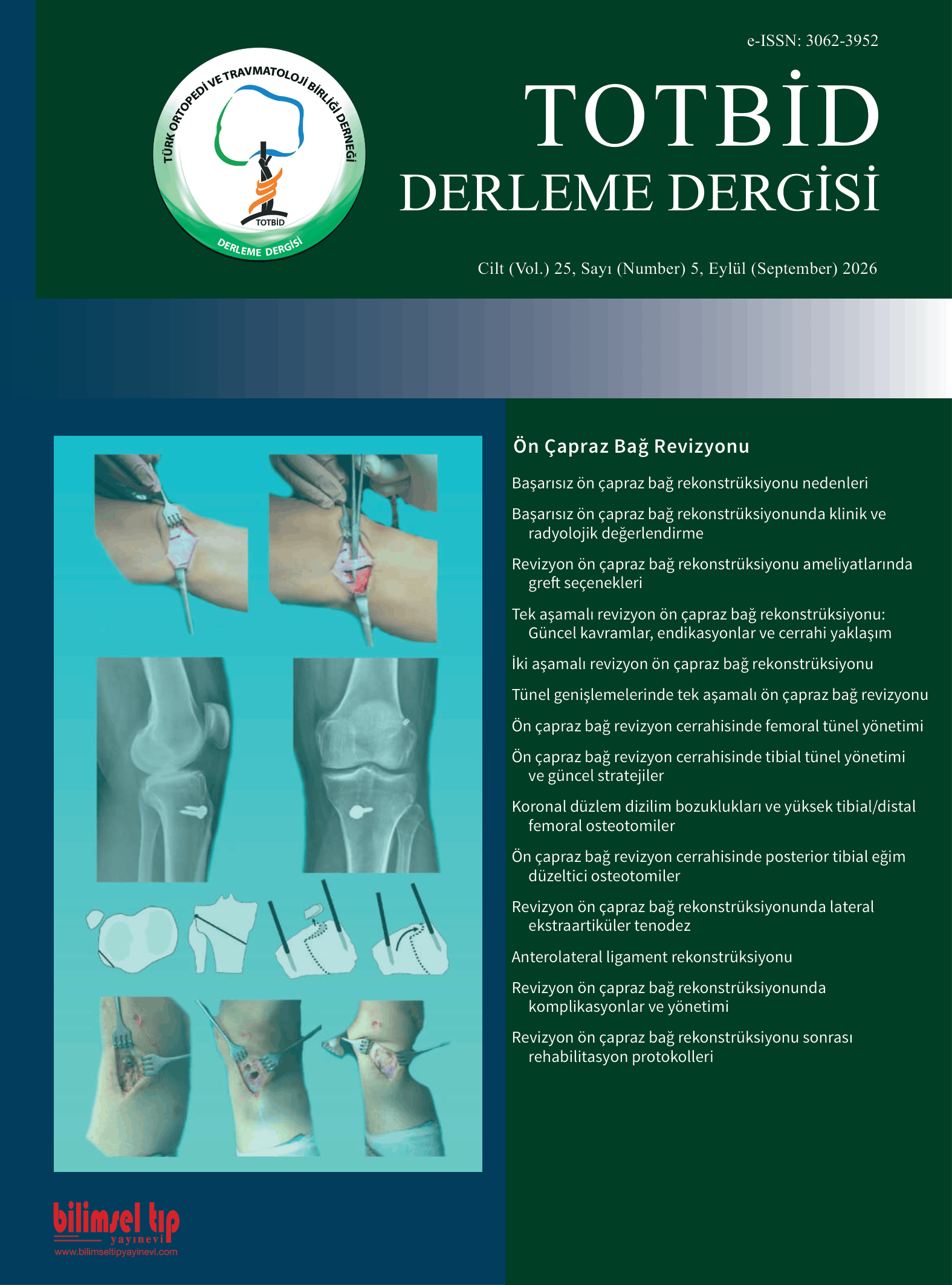
Revision anterior cruciate ligament reconstruction (ACLR) is a more complex procedure than primary surgery and requires specific planning, particularly due to tunnel enlargement, tunnel malposition, bone loss, and concomitant intra-articular pathologies. When indicated, two-stage revision ACLR is performed as an effective treatment option. In cases with tunnel enlargement, the failed graft and implants are removed during the first stage, and the tunnels are filled with bone graft; after adequate bone healing is achieved, revision ACLR is performed during the second stage. Current literature demonstrates that two-stage revision ACLR, when performed with appropriate indications, provides significant improvements in functional outcomes and patient-reported clinical scores. However, considerable variations exist regarding graft selection, bone grafting methods, and surgical techniques, and therefore the treatment plan should be individualized for each patient.