
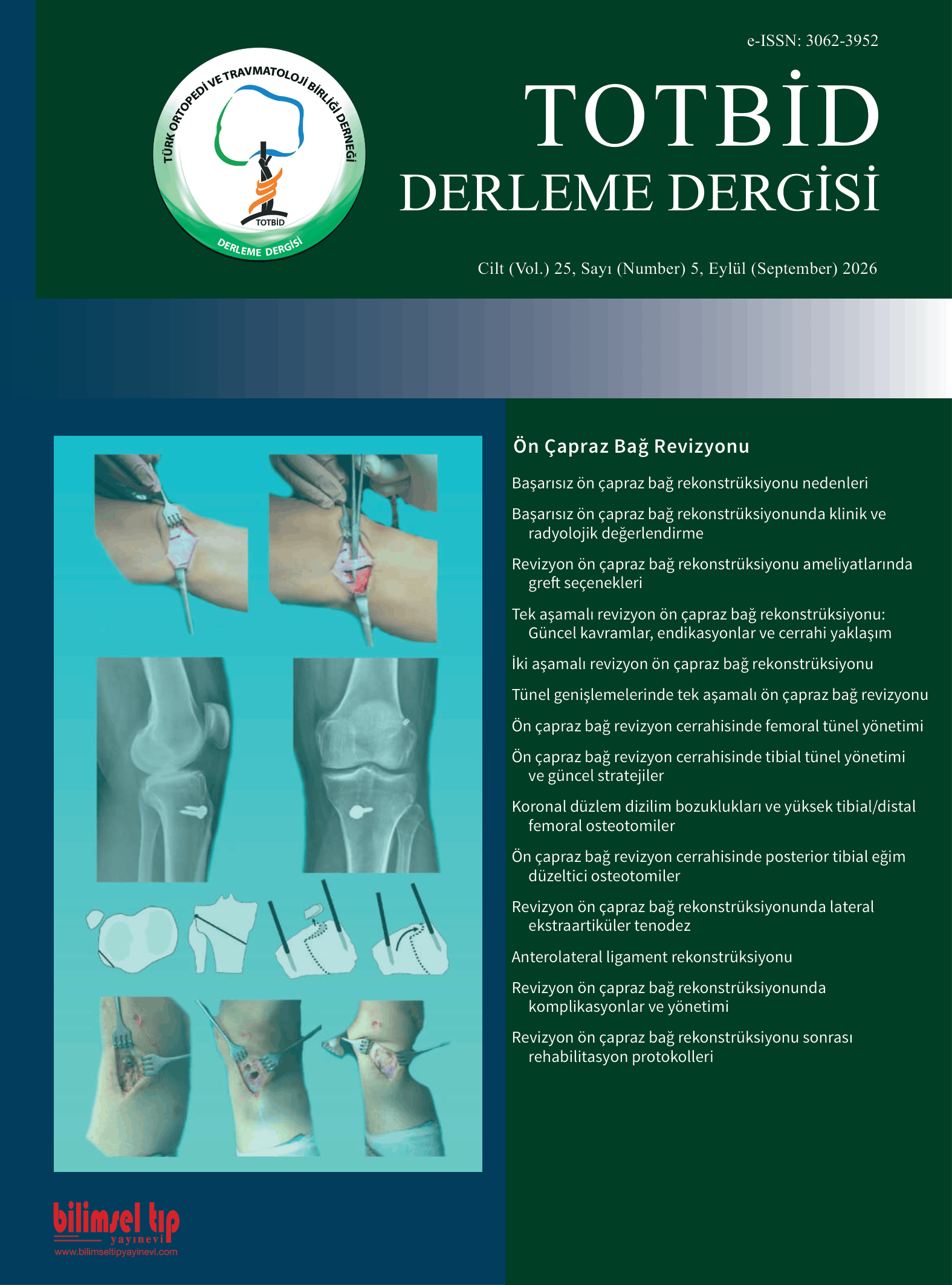
Currently, failure rates after anterior cruciate ligament reconstruction (ACL-R) range from 3,2% to 11,2%. Failed ACL-R has a multifactorial etiology and arises due to many factors including technical errors, graft selection, biomechanical factors, trauma, and patient-related variables. Studies have shown that the most significant cause of failure is technical errors. The evaluation process requires a combination of anamnesis, physical examination, and imaging methods (radiography, computed tomography, and magnetic resonance imaging). Combining clinical findings with radiological data reveals the underlying causes of failure and allows for the determination of a personalized revision strategy. In conclusion, a systematic and multifaceted evaluation approach is critical in improving surgical success in the management of failed ACL-R.